The Four Pads of 67 Simon, Explained One by One
A close look at the six, seven, both hands and clap pads in Six Seven Simon and how to tell them apart fast under pressure.
· 3 min read · by the 67 team

Six seven! Don't just read it: Play 67 Join the chat
Four pads. That is the whole board in Six Seven Simon. No fifth surprise pad unlocks later, no bonus tile appears at some milestone round. Just four gestures, arranged in a two by two grid, doing all the work. Since your entire game lives inside those four options, it is worth actually knowing each one cold instead of just recognizing them vaguely.
Six, the left hand
The first pad is six, shown as the left hand raised open. It glows lime when it lights up, and it is usually the gesture new players learn to spot fastest simply because it sits first in the grid for most people's reading order. Do not let that familiarity make you sloppy though, six shows up just as often deep into a long sequence as it does at the start.
Seven, the right hand
Right across from six sits seven, the right hand raised open. It glows in a punchy magenta, which is a deliberate contrast against six's lime glow. That color difference is not decoration, it is the fastest tool you have for telling the two apart in the split second before you have to tap. If you ever catch yourself confusing your gloves, lean on the color, not just the hand you think you saw.
Both hands, the six seven combo
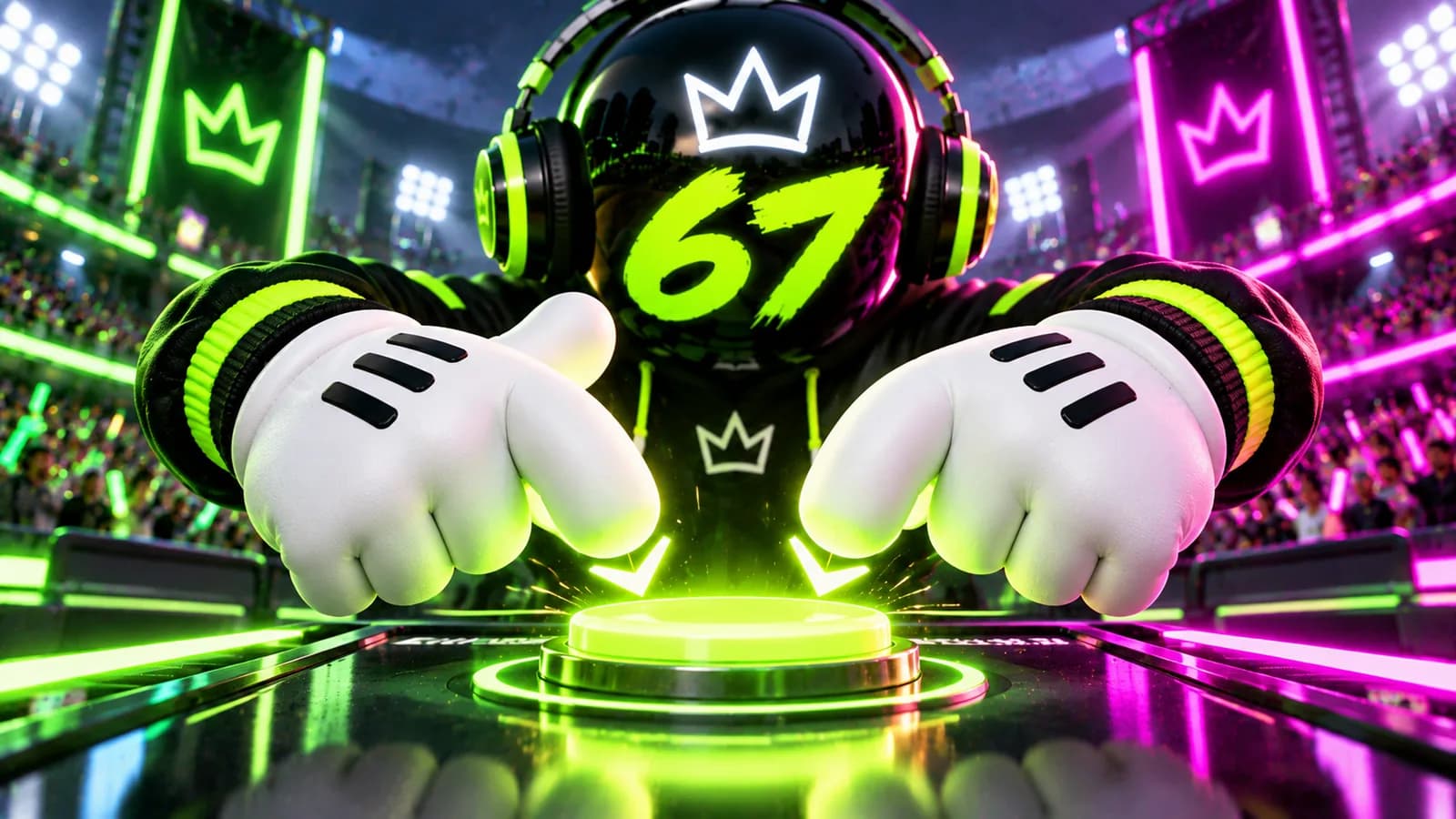
The third pad is both, labeled "six seven" in the game, and it lights up both hands together in a lighter, whiter glow. This is the pad most directly lifted from the meme itself, the classic two palm gesture that started the whole "six seven" moment. Visually it reads as busier than the other two since both hand sprites animate at once, so it tends to stand out in the sequence even under fast flashing.
Clap, the closed hands
The fourth and final pad is clap, both hands shown closed rather than open. It shares a lime glow with six, which is the one color overlap on the board, so this is the pairing most likely to trip you up if you are moving fast and reading color instead of shape. The tell is the hand shape, not the glow: open palms means six or seven, closed fists together means clap.
Why the pairing of colors matters
Look at the board and you will notice the color scheme is not random. Six and clap share lime. Seven sits alone in magenta. Both hands gets a neutral white. That leaves exactly one spot where two gestures share a color, and it is not an accident that it lands on the two gestures that are otherwise easiest to tell apart by shape, open hand versus closed fist. Once you notice that pattern, your brain stops needing to fully process every detail of every flash. You can read color first and shape second, and most of the time that is enough.
Building a mental shorthand
A useful trick once you know all four pads by heart is to give each one a one syllable label you say silently as it flashes. Something like "left," "right," "both," "clap." Four short words are much easier to hold in a chain than four visual memories of hand positions, and it means you are encoding the sequence as language, not just as pictures. This becomes essential the moment sequences push past five or six gestures, which happens quickly since every cleared round adds one more.
Put it together
None of this replaces actually playing. Reading about four gestures is not the same as reacting to them at increasing speed with three lives on the line. But knowing exactly what each pad looks like, sounds like, and how they relate to each other gives you a real head start before your reflexes have to take over.
Go put the theory to work. Play Six Seven Simon and see how quickly you can read lime from magenta from white under pressure. If you want the mechanics of the full sequence and lives system laid out first, check our guide on how to play, or bring your best round count to the chat and compare notes with other players.